
Notes from the field. Evaluating and fixing agents in production.
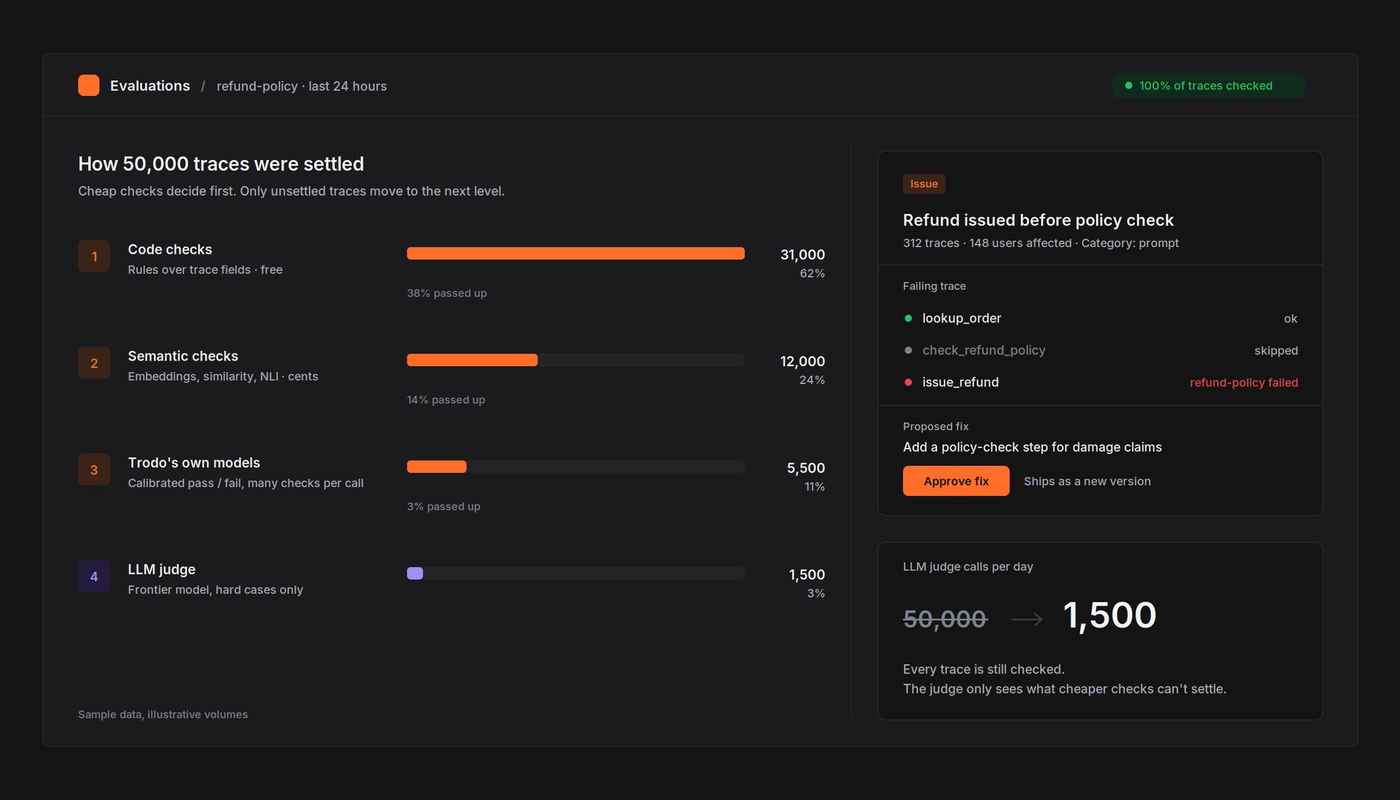
Agent evaluation on every trace, without the LLM-judge bill
Judging every production trace with an LLM is too expensive, and sampling misses the failures that matter. Triage checks arranged as a decision tree give you full coverage at a fraction of the cost.
Read the article
LLM as a Judge: Accuracy, Bias and Cost in LLM Evaluation
An LLM judge can grade agent output at scale, but it has biases, a real cost and needs calibration. Here is how it works, where it holds up and when cheaper checks do the job better.

Silent Agent Failures: Agent Observability Beyond Status OK
Traces that finish with status OK can still break policy, invent numbers or give up. A taxonomy of silent agent failures, the signals that reveal them and how to catch them on every trace.

Agent Evaluation in Production: A Practical Guide
What to measure, which checks to use, how to build datasets from production traces, where to set thresholds and how to turn failures into fixes. A practical guide to agent evaluation.
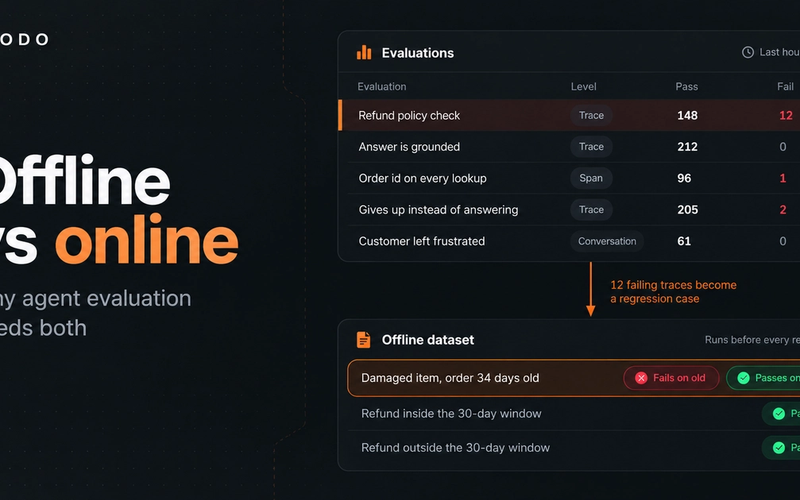
Offline vs Online LLM Evaluation for Agents: Use Both
Offline datasets catch regressions before release. Online checks catch what users actually hit. Here is what each misses and how production failures should feed your regression suite.
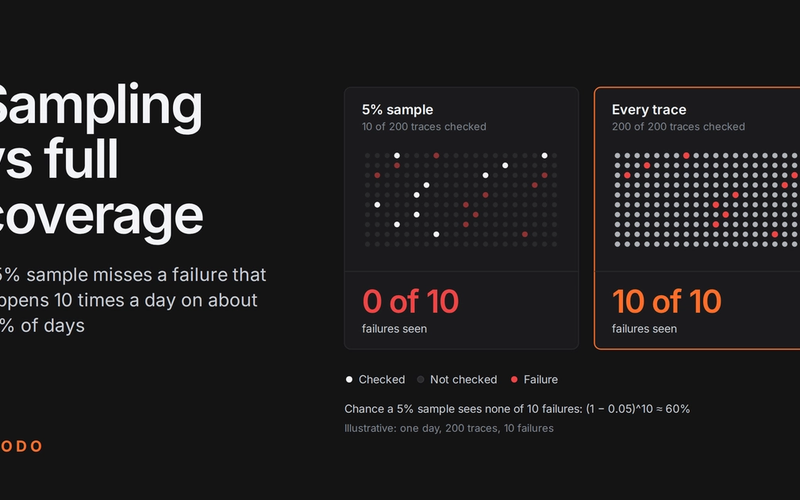
Trace Sampling vs Full Coverage in Agent Observability
A 5% sample misses a failure that happens 10 times a day on about 60% of days. Here is the math, when sampling is fine, and how triage makes checking every trace affordable.
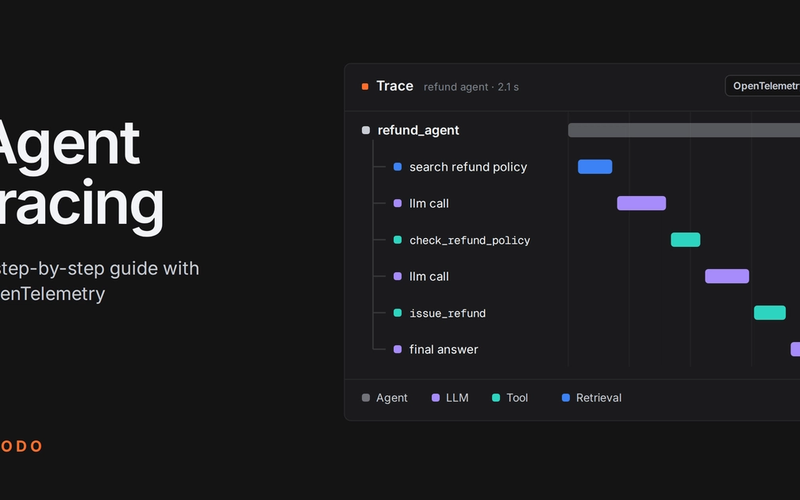
Agent Tracing with OpenTelemetry: A Step-by-Step Guide
A practical guide to agent tracing with OpenTelemetry: how to model LLM calls, tool calls and retrievals as spans, which attributes to record, and how to keep context across services and background jobs.
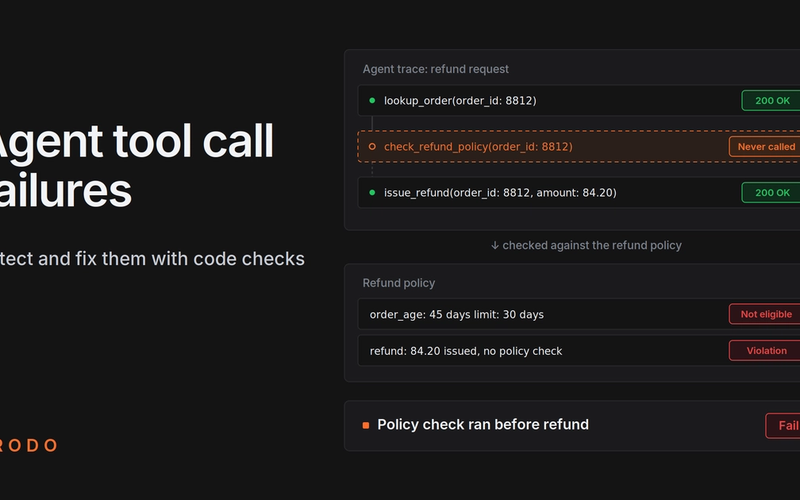
Agent Tool Call Failures: How to Detect and Fix Them
Tool calls are where agents most often break. Here are the six failure types, a code check on traces that catches each one, and the schema, prompt and guard changes that fix them.
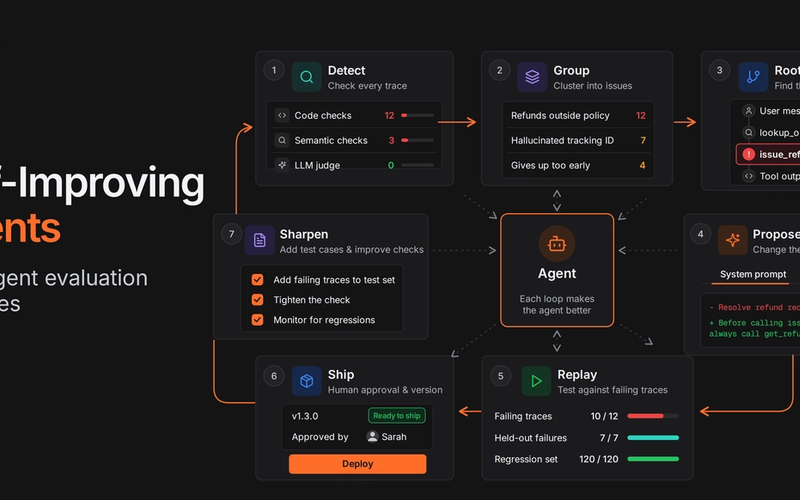
Self-Improving Agents: Turn Agent Evaluation Into Fixes
A practical loop for continuous improvement of LLM agents: checks on every trace, issues, root cause, replayed fixes, human approval and reversible versions.
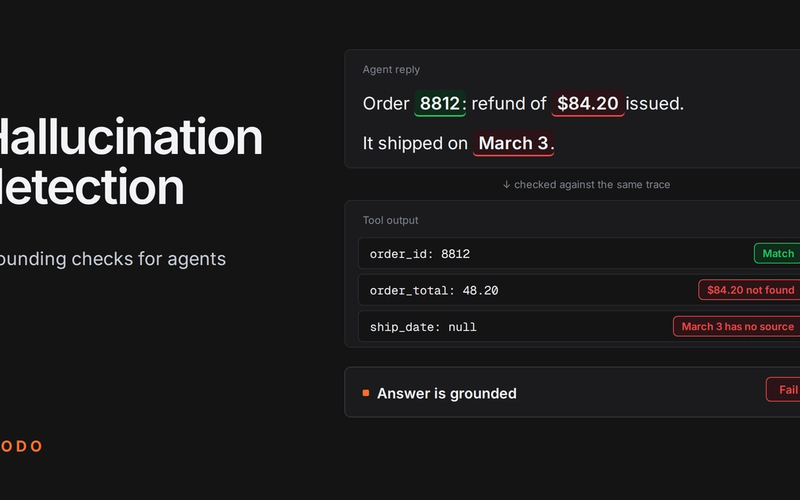
LLM Hallucination Detection for Agents: Grounding Checks
How to detect hallucinations in agents: check that every number and claim traces back to a tool output in the same trace, then layer semantic and model-based checks on top.

Why Agentic AI Products Struggle With Retention (and How to Fix It)
Agentic AI products face unique retention challenges that traditional product strategies miss. Here is what drives churn in AI-native apps and the measurement frameworks that fix it.

LLM Observability vs Product Analytics: Two Tools, One Goal
LLM observability and product analytics answer different questions for different teams, but they share one goal: making AI products better. Here is how to use both effectively.
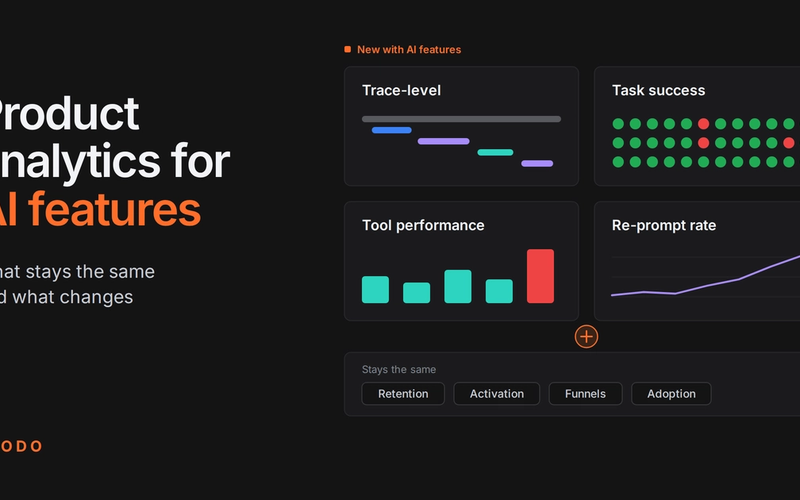
How Product Analytics Changes When You Ship AI Features
Shipping AI features changes what you need to measure, how you measure it, and how you act on the data. Here is how to evolve your product analytics practice for AI-powered products.
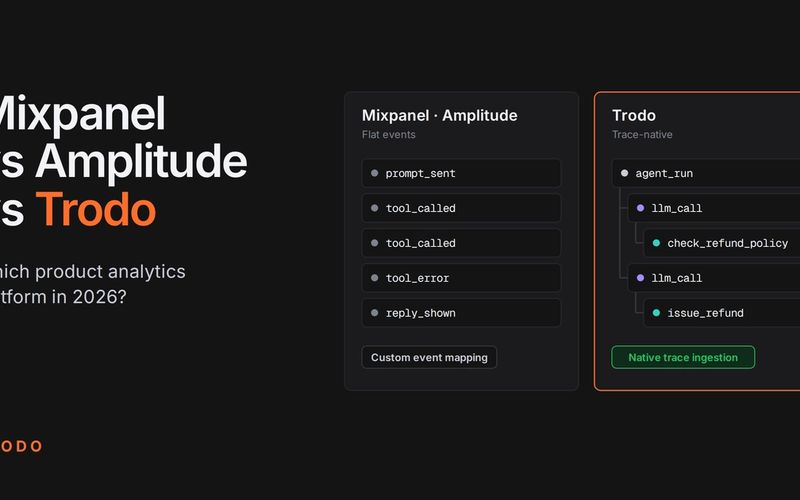
Mixpanel vs Amplitude vs Trodo: Which Product Analytics Platform in 2026?
A direct comparison of Mixpanel, Amplitude, and Trodo for product analytics in 2026 — covering strengths, weaknesses, and which platform fits which team, especially those shipping AI features.
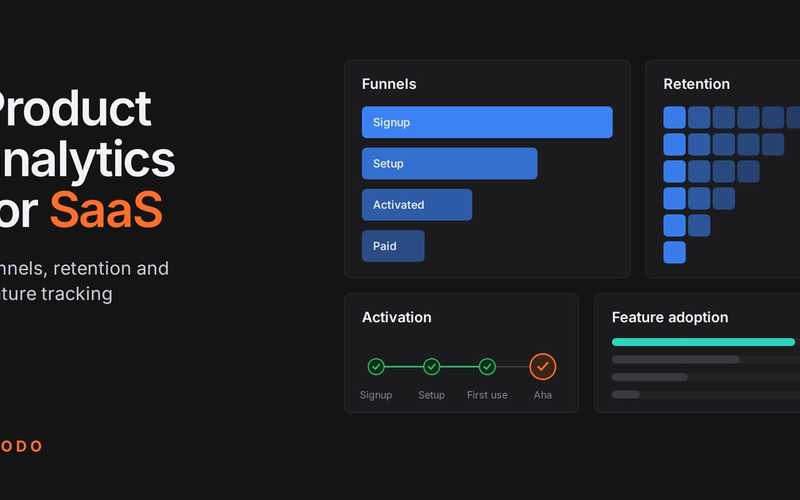
Product Analytics for SaaS: Funnels, Retention & Feature Tracking
A practical guide to product analytics for SaaS companies — covering the core frameworks, key metrics, and modern approaches for teams building products that include AI features.
Product Analytics for Chatbots and AI Copilots
How to measure, improve, and grow products built around chatbots and AI copilots, the product analytics approach that goes beyond session counts to trace-level behavioral insight.
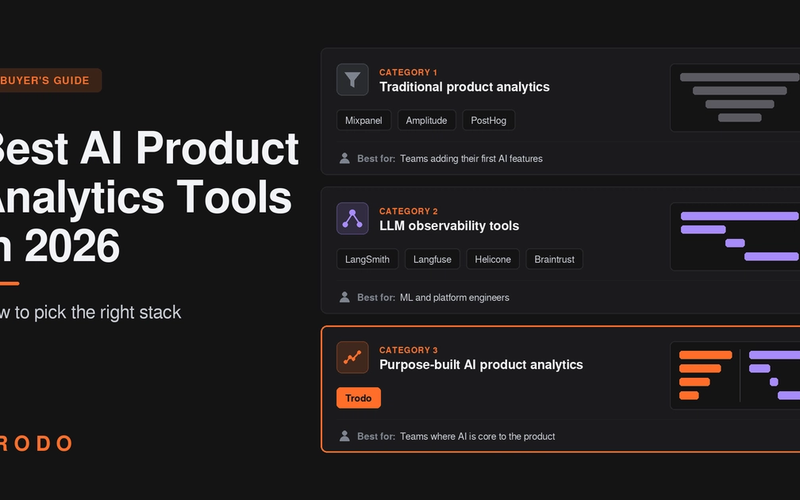
Best AI Product Analytics Tools in 2026: A Buyer's Guide
A practical comparison of the leading AI product analytics tools in 2026. We cover what each platform does well, what it misses, and how to pick the right stack for AI-native product teams.

Trodo vs LangSmith: AI Product Analytics or LLM Observability?
A direct comparison of Trodo and LangSmith — what each does, who it serves, and how to decide which one (or both) your AI team needs in 2026.
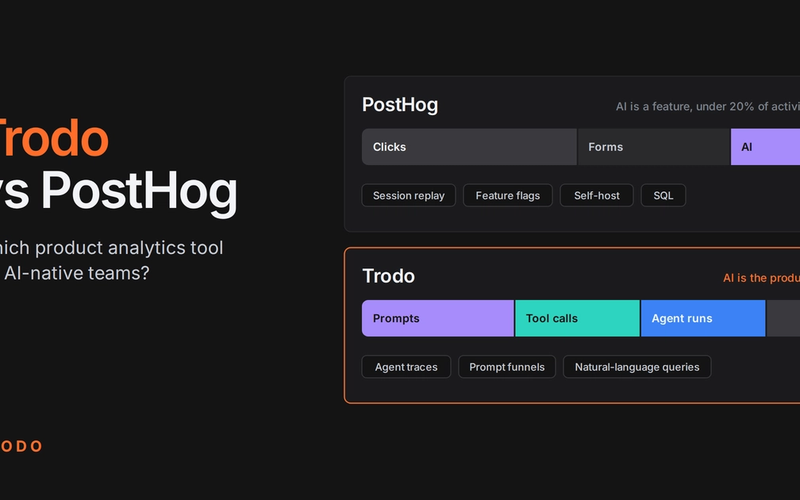
Trodo vs PostHog: Which Product Analytics Tool for AI-Native Teams?
Trodo and PostHog both call themselves product analytics platforms, but they target different problems. Here is a clear comparison for teams shipping AI-native products in 2026.
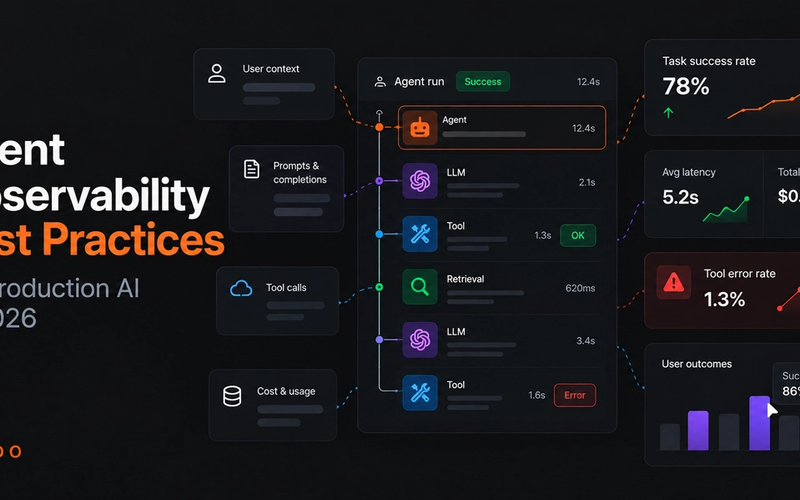
Agent Observability Best Practices for Production AI in 2026
A practical playbook for agent observability: what to instrument, which signals matter, how to connect agent traces to product KPIs, and the mistakes most teams make in their first six months.

How to Measure AI Feature Adoption in Your Product
Measuring AI feature adoption requires different metrics than traditional feature tracking. This guide covers the frameworks, signals, and analytics approaches that work for AI-powered products.

What Is AI Observability? The 2026 Guide for Product & Engineering Teams
AI observability explained: what it is, how it differs from traditional observability and LLM observability, the signals that matter for AI agents and LLM-powered products, and how it fits alongside AI product analytics.
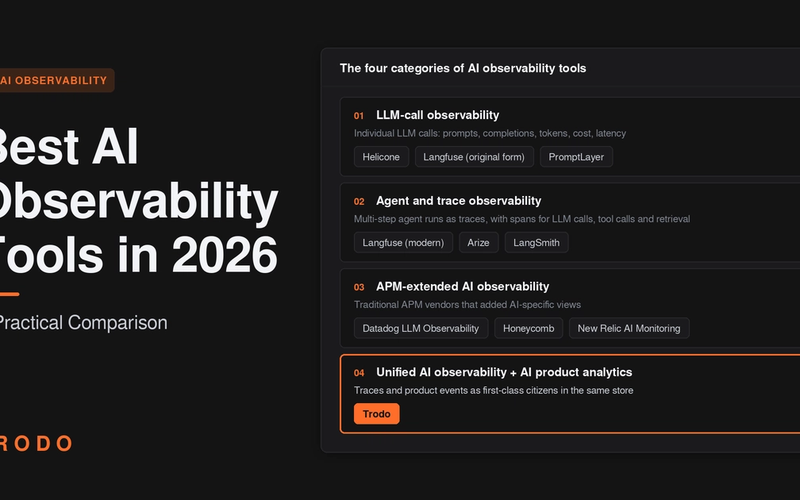
Best AI Observability Tools in 2026: A Practical Comparison
A practical 2026 comparison of AI observability tools — Arize, Langfuse, Helicone, Datadog LLM, Honeycomb, and Trodo — covering what each does well, where they fall short, and how to choose the right one for your AI product.

AI Product Analytics vs Traditional Product Analytics: What Actually Changes
Traditional product analytics was built for apps with clicks and screens. AI product analytics is built for apps with prompts, tool calls, and agents. Here is what changes — events, funnels, retention, and the questions each can answer.

Agent Analytics vs Agent Observability vs LLM Observability: Clear Definitions
Agent analytics, agent observability, and LLM observability get used interchangeably — but they are not the same. Here is a clear disambiguation of each term, the audiences they serve, and how they fit together in a production AI stack.

AI Product Analytics: The 2026 Guide for AI-Native Teams
Everything product teams need to know about AI product analytics in 2026 — what it measures, how it differs from traditional analytics, and how to build a measurement foundation for AI-native applications.
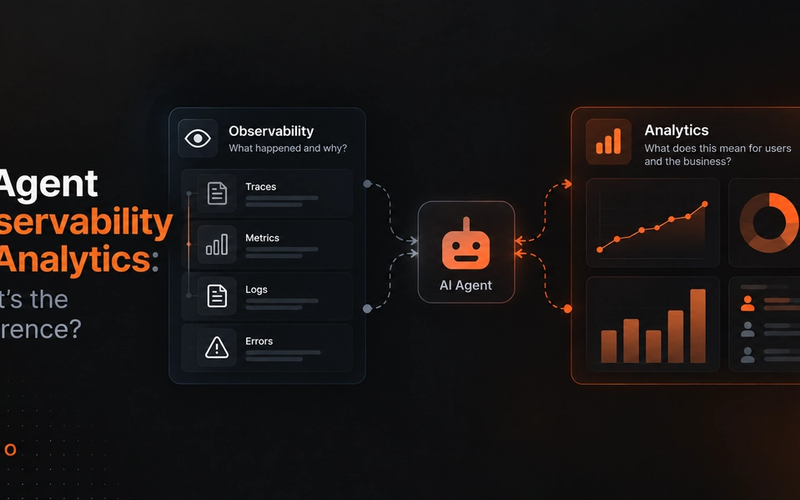
AI Agent Observability vs Analytics: What's the Difference?
AI agent observability and AI agent analytics are often confused but serve different audiences and answer different questions. Here is how to think about both and when you need each.
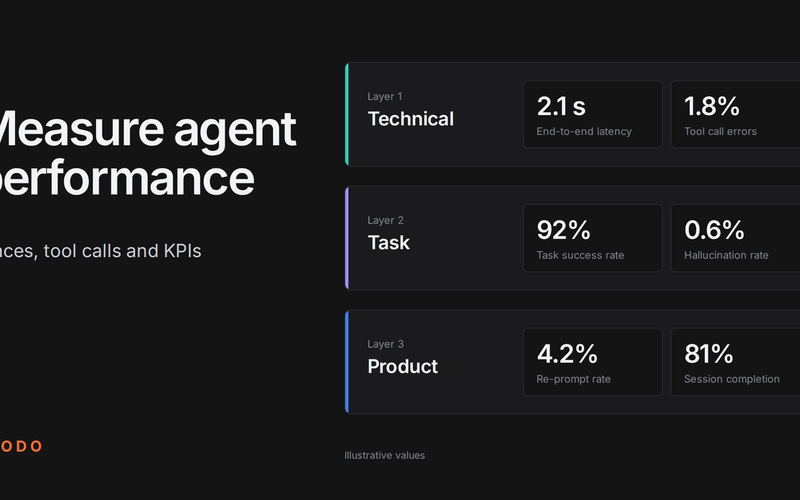
How to Measure AI Agent Performance: Traces, Tool Calls & KPIs
A practical guide to the KPIs, metrics, and measurement approaches that product teams use to evaluate AI agent performance in production — from trace-level data to business outcomes.
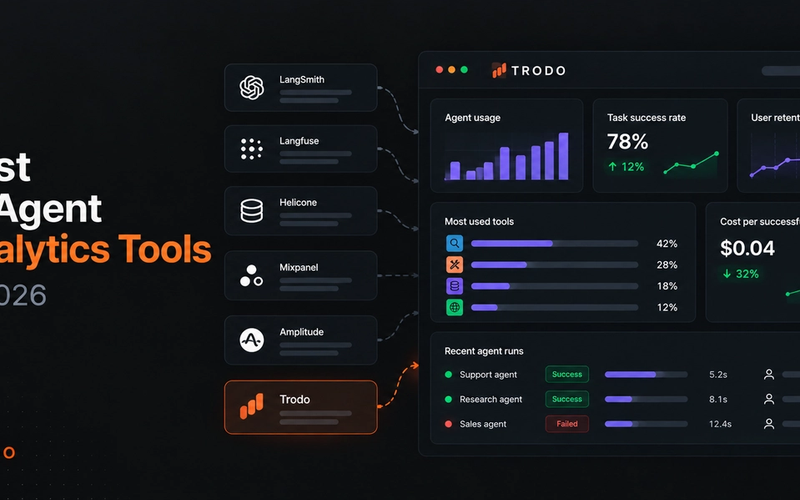
Best AI Agent Analytics Tools in 2026: Monitor LLM Agents at Scale
A practical comparison of the leading AI agent analytics tools in 2026 — covering what each does, who it is for, and how to choose the right stack for your product team.
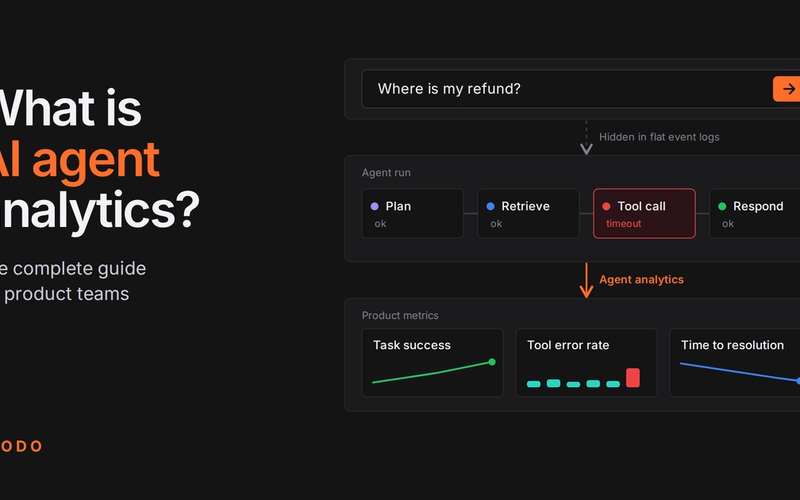
What Is AI Agent Analytics? The Complete Guide for Product Teams
AI agent analytics explained: how to trace LLM agents, measure tool call success, connect agent performance to product outcomes, and why flat event tracking is no longer enough.
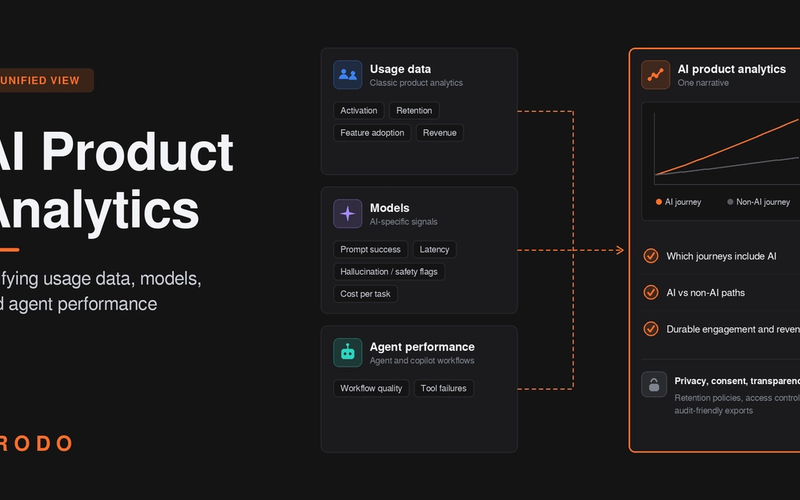
AI Product Analytics: Unifying Usage Data, Models, and Agent Performance
Why AI product analytics blends traditional product metrics with model and agent signals—and how to build a coherent measurement stack for AI-native products.
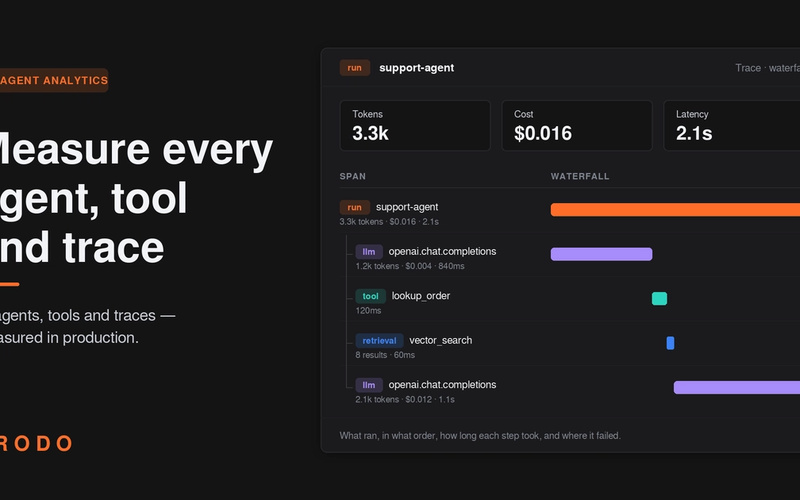
Agent Analytics: Measuring AI Agents, Tools, and Traces in Production
A practical guide to agent analytics: tracing orchestrations, tool calls, latency, and failure modes so you can ship reliable AI features and prove value with data.
What Is Product Analytics? Funnels, Retention, and Event Data Explained
Learn what product analytics means in practice: events, funnels, cohorts, and how teams use them to improve activation and retention, with a clear lens on modern product intelligence.